On this page
- Prep
- 40 min
- Cook
- 2 h
- Serves
- 8
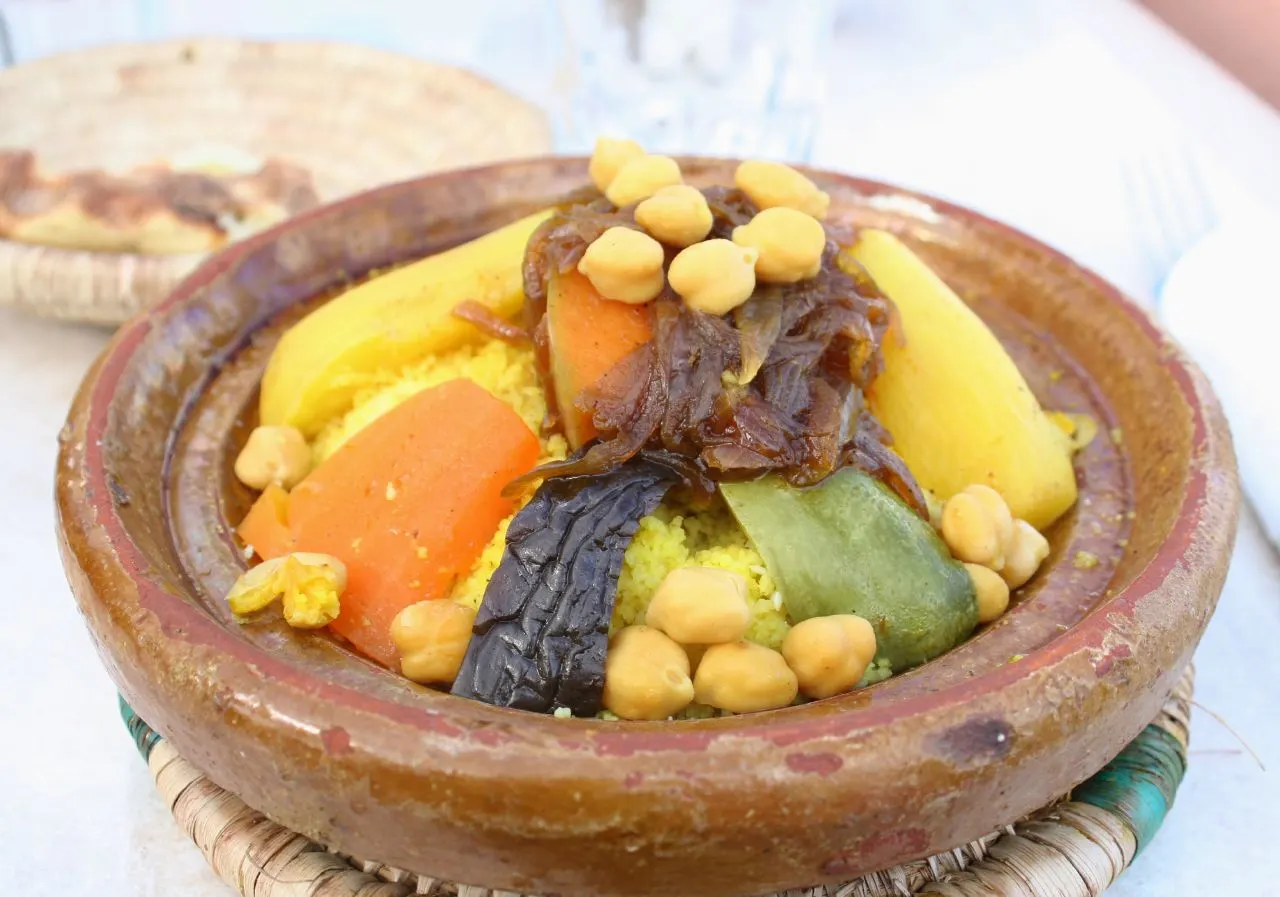
Seven-vegetable couscous is Morocco's Friday lunch: semolina grains steamed two or three times over a broth of meat, chickpeas and seasonal vegetables, then piled on one big platter and soaked with the broth. It takes about 40 minutes of prep and 2 hours of cooking, most of it simmering. The steaming takes some attention, but the method is easy once you have done it once, and you don't need a couscoussier.
In 2020 UNESCO added the knowledge and practices around couscous to its intangible heritage list in a joint nomination from Algeria, Mauritania, Morocco and Tunisia. That joint file is a good reminder that couscous belongs to the whole Maghreb, and each region cooks it its own way.
At a glance
| Serves | 8 |
| Prep | 40 minutes |
| Cook | About 2 hours |
| Difficulty | Medium (mostly timing) |
| Equipment | Couscoussier, or a big pot plus a snug steamer or colander |
Ingredients
Broth
- 1 kg (2.2 lb) beef shin, lamb shoulder or chicken, on the bone, in large pieces
- 2 onions, quartered
- 2 ripe tomatoes, grated (or 200 g / 7 oz canned)
- 4 tbsp (60 ml) oil + 1 tbsp smen or butter (optional)
- 1 tsp ground ginger, 1 tsp black pepper, ½ tsp turmeric, a pinch of saffron
- 2 tsp salt
- A bunch of cilantro and parsley, tied
- 2.5 L (10 cups) water
- 1 can (400 g / 14 oz) chickpeas, or 120 g (⅔ cup) dried, soaked overnight
The seven (or so) vegetables
- 4 carrots, halved lengthwise
- 2 turnips, quartered
- ¼ small green cabbage, in 2 wedges
- 400 g (14 oz) pumpkin or butternut, skin on, in large pieces
- 3 zucchini, halved lengthwise
- The onions and tomatoes already in the broth
- 1 hot green chili (optional, left whole)
Couscous
- 500 g (about 2¾ cups) dry medium couscous
- 3 tbsp oil
- About 500 ml (2 cups) water, added in stages, with ½ tsp salt dissolved in the second and third additions
- 30–50 g (2–3 tbsp) butter
Instructions
- Start the broth. Put the meat, onions, tomatoes, oil, smen, spices, salt and herbs in the base of the couscoussier. Stir over medium heat for 10 minutes.
- Simmer. Add the water (and dried chickpeas, if using). Bring to a boil, cover and simmer for 45 minutes. For chicken, 25 minutes is enough.
- First hydration. In a wide bowl, rub the dry couscous with 3 tbsp oil between your palms until every grain is coated. Sprinkle over 250 ml (1 cup) water a little at a time, working the grains with your fingers so they absorb it evenly. Rest 10 minutes.
- First steaming. Add the carrots, turnips and cabbage to the broth. Put the couscous loosely into the steamer top (don't pack it down) and set it over the pot. When you see steam rising through the surface of the grains, start a 15-minute timer.
- Second hydration. Tip the couscous back into the bowl. It will be clumped; break it up with a spoon, then your fingers as it cools. Sprinkle with 125 ml (½ cup) salted water and fluff. Rest 10 minutes.
- Second steaming. Add pumpkin, zucchini, canned chickpeas and the chili to the broth. Return the couscous to the steamer and steam 15 minutes once the steam comes through.
- Third steaming. Tip out, fluff, and if the grains still feel firm add another 125 ml (½ cup) water. Steam a final 10–15 minutes. By now every grain should be swollen, soft and separate.
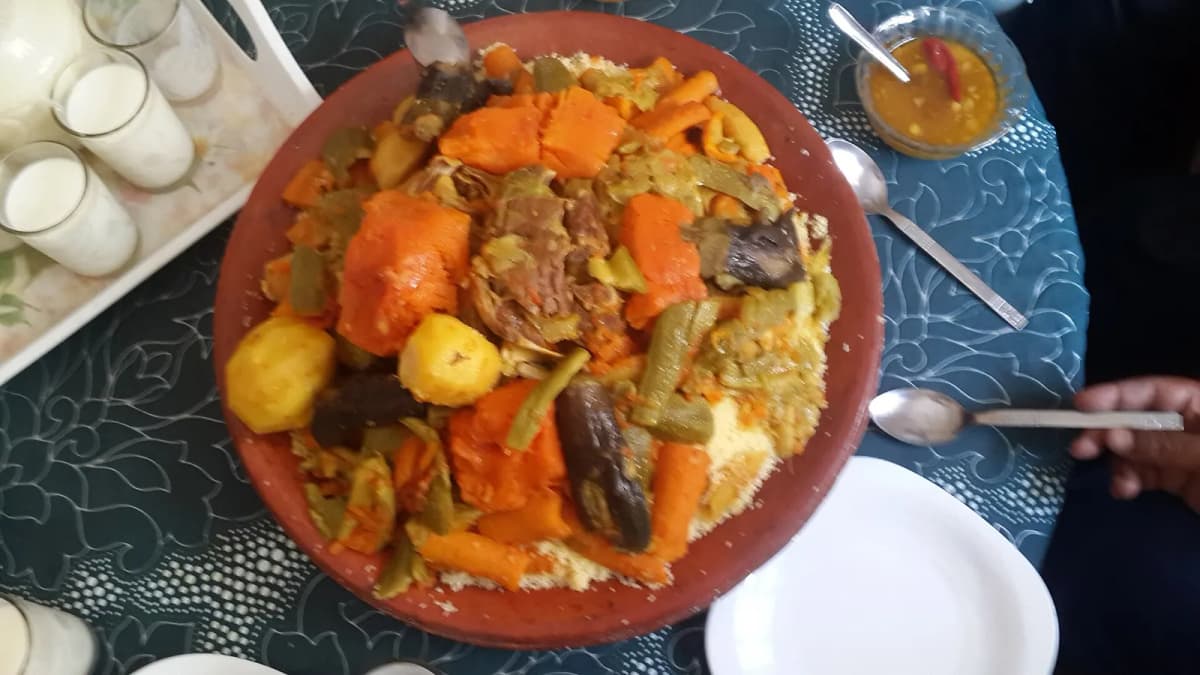
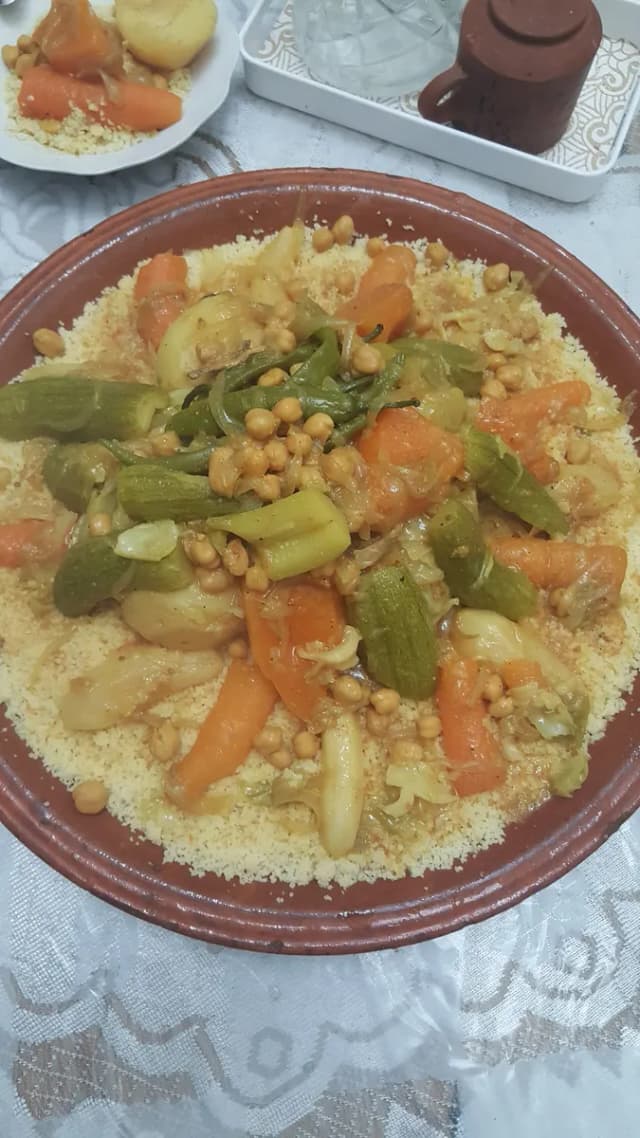
- Butter and assemble. Work the butter into the hot couscous. Mound it on a large platter, make a well in the middle, put in the meat and arrange the vegetables in a cone over the top, standing the carrots and zucchini up the sides. Ladle broth over until the grains are moist, and serve more broth in a bowl alongside.
No couscoussier? Use a large pot with a metal colander or steamer basket that sits on top without touching the broth. Wrap a damp strip of cloth or a twist of foil around the join so steam has to come through the grains.
When the vegetables go in
The main timing problem is vegetables that end up mushy or still hard. Add them by how long they take:
| Vegetable | Add after the meat has cooked | Total time in broth |
|---|---|---|
| Carrots, turnips, cabbage | 45 min (first steaming) | 45–50 min |
| Pumpkin, zucchini | Second steaming | 25–30 min |
| Canned chickpeas, chili | Second steaming | 25–30 min |
| Dried (soaked) chickpeas | With the water at the start | Full time |
Regional and seasonal variations
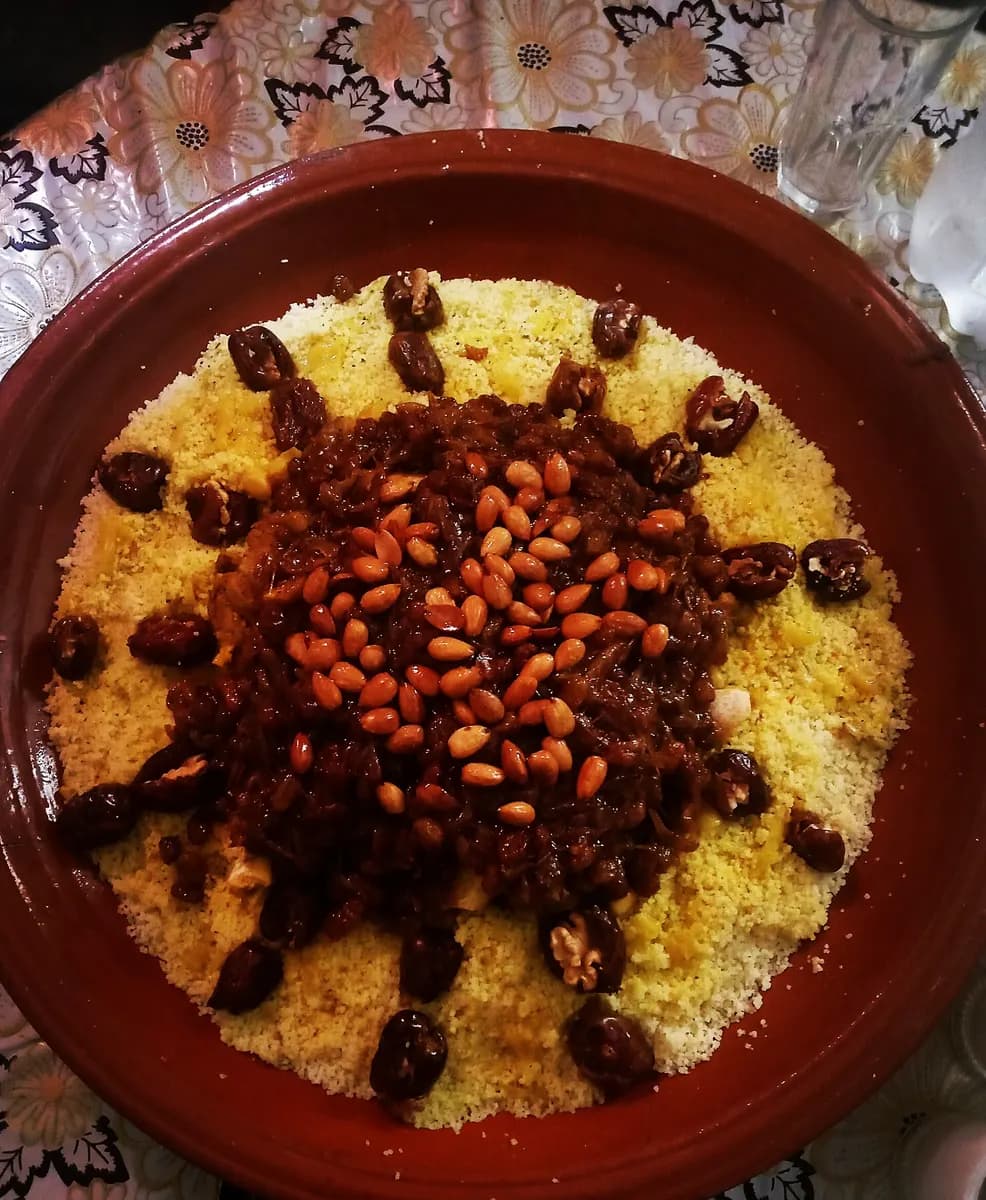
- Couscous tfaya adds a topping of onions slowly caramelised with raisins, cinnamon and honey, often with fried almonds. It is common in Fez and at family celebrations.
- Couscous Bidaoui (Casablanca style) is basically this recipe, often finished with tfaya.
- Souss and the south: couscous made from barley (belboula) or corn is common in Amazigh households in the countryside around Agadir. It is heartier and earthier.
- Winter: use more pumpkin, turnip and cabbage. Summer versions lean on zucchini and fresh fava beans.
Mistakes to avoid
| Mistake | Fix |
|---|---|
| Pouring boiling water over instant couscous and stopping there | Hydrate and steam at least once for fluffy grains |
| Packing the couscous into the steamer | Add it loosely so steam passes through |
| Gap between pot and steamer | Seal it; steam escaping sideways means raw grains |
| Wet, sticky couscous | Too much water at once. Sprinkle and rub in small amounts |
| All the vegetables in at once | Stagger them using the table above |
Make ahead and storage
The broth with meat can be made a day ahead; reheat it and add the vegetables in stages. Steamed couscous keeps 3 days in the fridge; reheat by steaming it again for 10 minutes or microwaving it covered with a splash of water. Store couscous and broth separately.
Serving
Couscous is a shared dish: the platter goes in the middle, and each person eats from the section in front of them, with buttermilk (lben) served alongside in many homes. If couscous is the main course, keep the rest of the meal light: a salad first, then mint tea. For a spicier broth, add ½ tsp of ras el hanout with the other spices.
Recipe card
Moroccan Seven-Vegetable Couscous (Friday Couscous)
- Prep
- 40 min
- Cook
- 2 h
- Serves
- 8
Ingredients
- 1 kg (2.2 lb) beef shin, lamb shoulder or chicken pieces, on the bone, in large chunks
- 2 onions, quartered
- 2 ripe tomatoes, grated (or 200 g / 7 oz canned chopped tomatoes)
- 4 tbsp (60 ml) vegetable or olive oil
- 1 tbsp smen or butter (optional)
- 1 tsp ground ginger
- 1 tsp ground black pepper
- 1/2 tsp ground turmeric
- A pinch of saffron (optional)
- 2 tsp salt, plus more to taste
- 1 bunch cilantro and parsley, tied
- 2.5 L (10 cups) water
- 1 can (400 g / 14 oz) chickpeas, drained, or 120 g (2/3 cup) dried chickpeas soaked overnight
- 4 carrots, halved lengthwise
- 2 medium turnips, quartered
- 1/4 small green cabbage, in 2 wedges
- 400 g (14 oz) pumpkin or butternut squash, in large pieces, skin on
- 3 zucchini, halved lengthwise
- 1 hot green chili (optional)
- 500 g (about 2 3/4 cups) dry medium couscous
- About 500 ml (2 cups) water for the grains, in stages
- 3 tbsp oil and 30-50 g (2-3 tbsp) butter for the grains
Method
- 1Put the meat, onions, tomatoes, oil, smen, spices, salt and herb bundle in the base of a couscoussier or large pot. Cook over medium heat 10 minutes, stirring.
- 2Add the water and dried chickpeas if using. Bring to a boil, cover and simmer 45 minutes (chicken 25 minutes).
- 3Rub the couscous with 3 tbsp oil, then sprinkle with 250 ml (1 cup) water and work it with your fingers until absorbed. Rest 10 minutes.
- 4Add carrots, turnips and cabbage to the broth. Put the couscous loosely in the steamer basket over the pot. Once steam rises through the grains, steam 15 minutes.
- 5Tip the couscous into a wide bowl, break up lumps, sprinkle with 125 ml (1/2 cup) salted water and fluff. Rest 10 minutes.
- 6Add pumpkin, zucchini, canned chickpeas and chili to the broth. Return the couscous to the steamer and steam 15 minutes once steam appears.
- 7Tip out again, add another 125 ml (1/2 cup) water if the grains feel firm, fluff and steam a third time for 10-15 minutes.
- 8Work the butter into the hot couscous. Mound it on a large platter, make a well, add the meat, arrange the vegetables on top and ladle over broth. Serve extra broth on the side.
FAQ
Do I need a couscoussier?
No. A large pot with a steamer basket or metal colander that fits snugly on top works. Seal any gap with a strip of damp cloth or foil so the steam goes through the grains.
Can I use instant couscous?
Yes. Most couscous sold abroad is pre-steamed. Hydrating it and then steaming it once or twice over the broth gets you much closer to the texture of Moroccan couscous than just pouring boiling water over it.
Does it have to be exactly seven vegetables?
No. Seven is the traditional ideal, but families use what is in season. Carrots, turnips, zucchini, cabbage, pumpkin, onion and tomato are the usual core.
Can it be vegetarian?
Yes. Leave out the meat, add a little more oil or butter and an extra handful of chickpeas. The vegetables still make a flavourful broth.
Sources
- UNESCO: Knowledge, know-how and practices pertaining to the production and consumption of couscous (2020)
- Al Jazeera: UNESCO adds couscous to list of intangible world heritage
- Taste of Maroc: Couscous Bidaoui (reference recipe)
- MarocMama: Moroccan seven vegetable couscous (reference recipe)
- Royal Mansour: Seven-vegetable couscous by chef Karim Benbaba (reference recipe)