On this page
- Prep
- 25 min
- Cook
- 1 h 30 min
- Serves
- 4
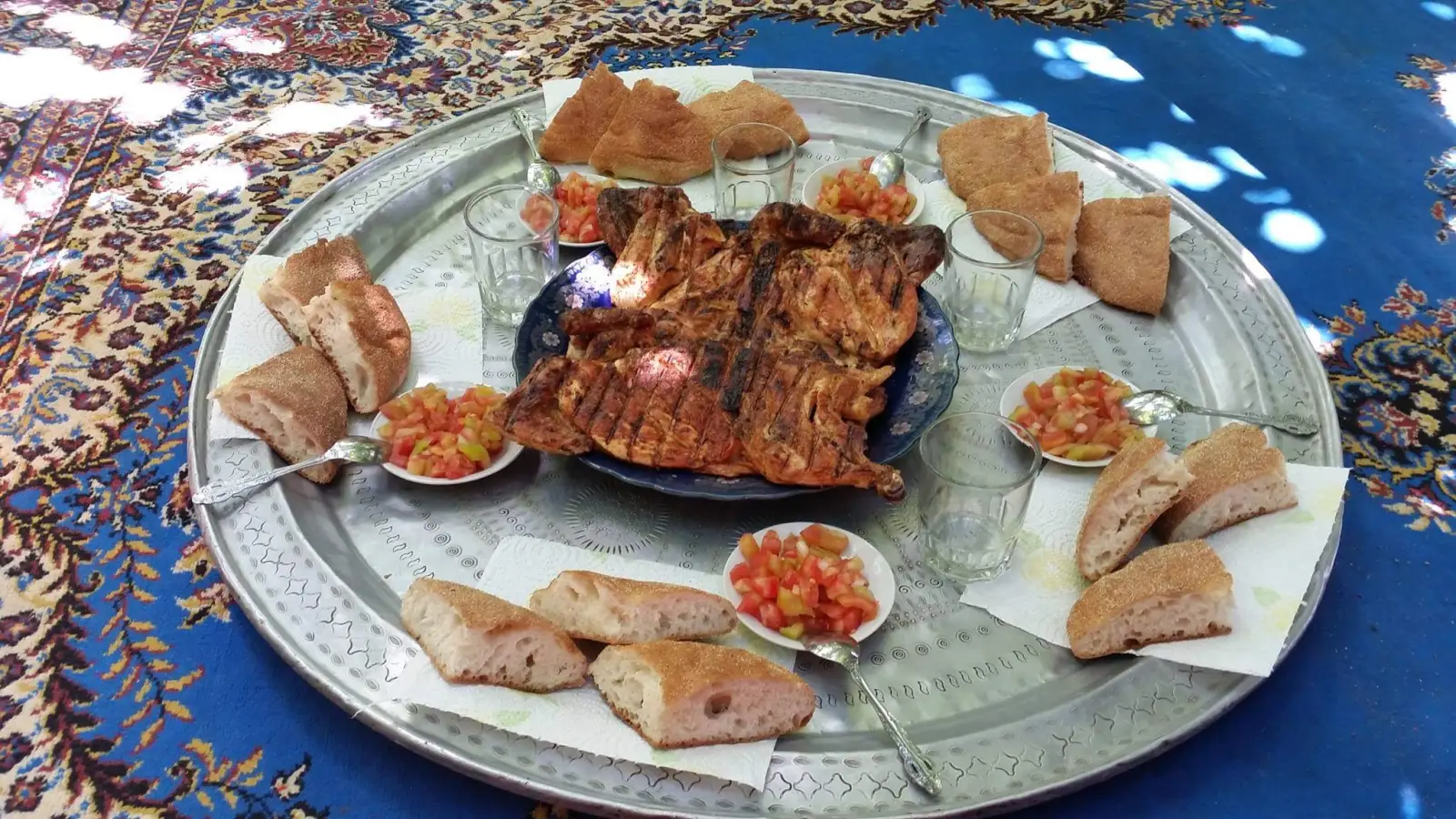
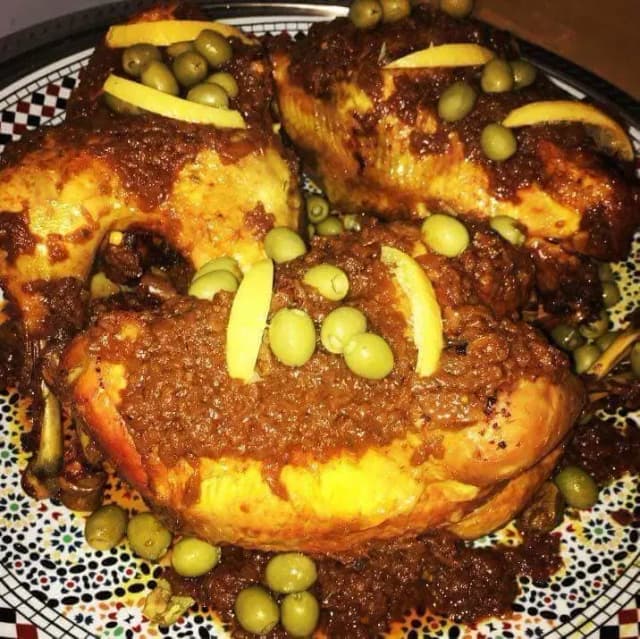
Moroccan roast chicken is a whole bird rubbed with a paste of ras el hanout, paprika, garlic, herbs and chopped preserved lemon (plus harissa if you like heat), then roasted on a bed of onions that turns into the sauce. For a 1.6–1.8 kg (3.5–4 lb) chicken, roast at 200 °C (400 °F) for 1 hour 10 minutes to 1 hour 30 minutes, until the thigh reads 74 °C (165 °F), then rest 15 minutes. It takes 25 minutes of hands-on work and is my go-to when I want a Moroccan centrepiece for a Thanksgiving or Christmas table without cooking a turkey.
In Morocco, one of the classic chickens for celebrations is djaj mhammar, "reddened" chicken, which is braised first and browned afterwards. Most home ovens abroad do the whole job well in one go, so the main recipe below is a straight roast. The traditional two-stage method is further down if you want to try it.
At a glance
| Serves | 4 (or 6 with several sides) |
| Prep | 25 minutes, plus 1–24 hours marinating |
| Cook | 1 hour 10 minutes to 1 hour 30 minutes, plus 15 minutes resting |
| Oven | 200 °C (400 °F), no fan (180 °C fan) |
| Done when | 74 °C (165 °F) in the thickest part of the thigh |
| Difficulty | Easy |
Ingredients
The chicken
| Ingredient | Metric | US |
|---|---|---|
| Whole chicken | 1.6–1.8 kg | 3.5–4 lb |
| Fine salt | 1 tsp | 1 tsp |
The spice paste
| Ingredient | Metric | US |
|---|---|---|
| Preserved lemon, rind only | 1 lemon | 1 lemon |
| Butter or smen, softened | 40 g | 3 tbsp |
| Olive oil | 30 ml | 2 tbsp |
| Garlic, grated | 4 cloves | 4 cloves |
| Ras el hanout | 1 tbsp | 1 tbsp |
| Sweet paprika | 2 tsp | 2 tsp |
| Ground cumin | 1 tsp | 1 tsp |
| Harissa paste | 15–30 g | 1–2 tbsp |
| Saffron threads in 1 tbsp warm water (optional) | about 10 threads | about 10 threads |
| Fresh cilantro, chopped | 3 tbsp, plus more to serve | 3 tbsp, plus more to serve |
| Fresh flat-leaf parsley, chopped | 3 tbsp | 3 tbsp |
The pan
| Ingredient | Metric | US |
|---|---|---|
| Onions, thick rings | 2 large (about 400 g) | 2 large (14 oz) |
| Olive oil | 15 ml | 1 tbsp |
| Water | 120 ml | ½ cup |
| Green or violet olives, rinsed | 120 g | ¾ cup |
Instructions
- Dry the bird. Pat the chicken dry with paper towels, inside and out. Dry skin browns; wet skin steams. Season the cavity with a pinch of the salt.
- Make the paste. Quarter the preserved lemon, scrape out and discard the pulp, rinse the rind and chop it as finely as you can. Mash it in a bowl with the butter or smen, olive oil, garlic, ras el hanout, paprika, cumin, harissa, saffron water, the rest of the salt and the chopped herbs.
- Rub it in. Slide your fingers under the breast and thigh skin to loosen it without tearing. Push about half the paste under the skin, right onto the meat, and rub the rest over the outside and inside the cavity. Tie the legs together with string.
- Marinate. Leave 1 hour at room temperature, or cover and refrigerate for up to 24 hours. A chilled bird goes back on the counter for 30 to 45 minutes before roasting.
- Set up the pan. Heat the oven to 200 °C (400 °F), no fan. Toss the onion rings with 1 tbsp olive oil in a roasting pan, pour in the water and sit the chicken on the onions, breast up.
- Roast. Roast for 1 hour 10 minutes to 1 hour 30 minutes, basting with the pan juices every 20 minutes. Paprika and harissa darken quickly, so if the breast is deep brown after 40 minutes, cover it loosely with foil.
- Add the olives. Scatter them around the chicken for the last 20 minutes. If the onions start to catch, add a splash of water.
- Check and rest. Push a thermometer into the thickest part of the thigh, without touching bone. At 74 °C (165 °F) it is done. Rest it 15 minutes, loosely covered with foil.
- Serve. Carve, pile the soft onions, olives and juices around it and scatter with cilantro. Put bread on the table for the juices.
Substitutions for cooks abroad
| If you don't have | Use | Notes |
|---|---|---|
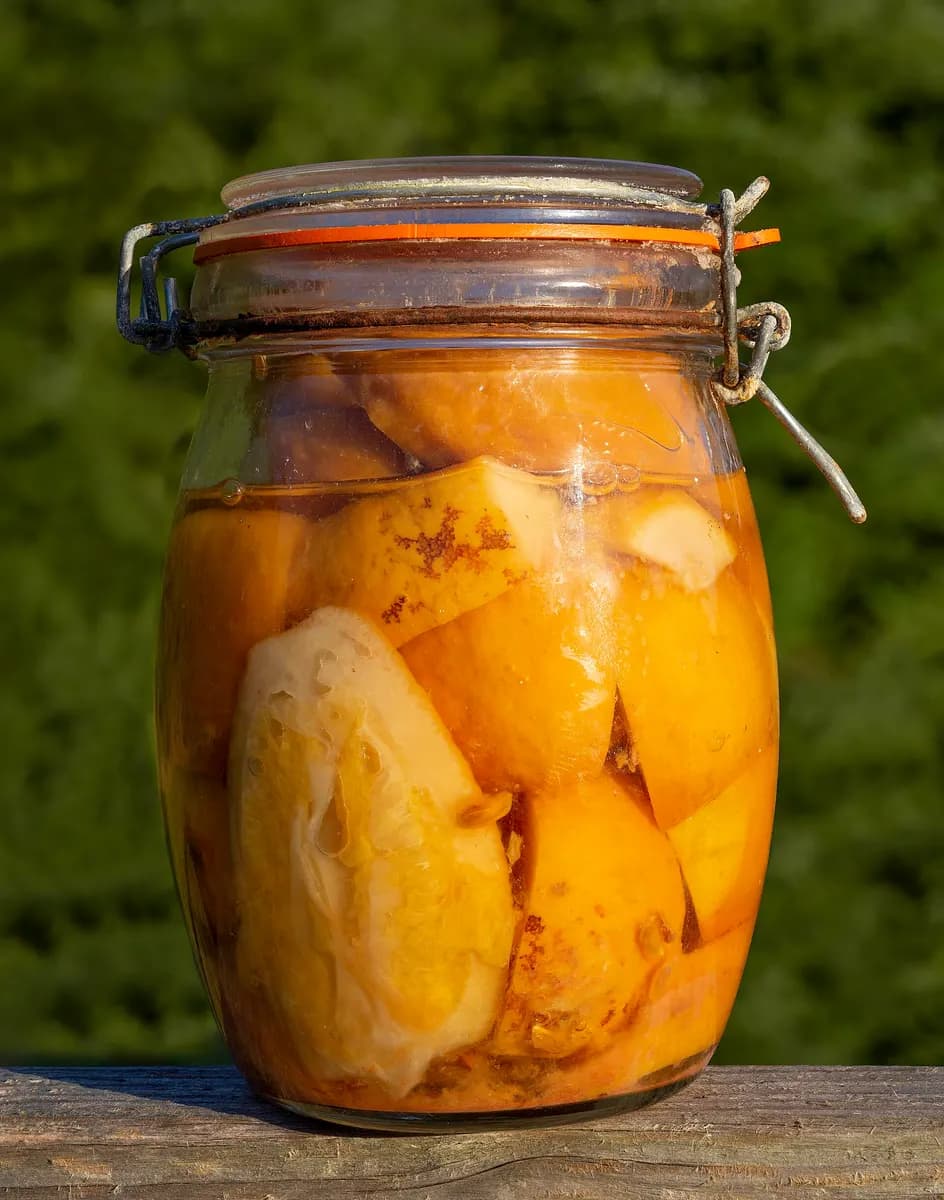
| Preserved lemon | Zest of 1 lemon + 1 tbsp lemon juice + ¼ tsp extra salt | Brighter and sharper; homemade preserved lemons take about a month |
| Ras el hanout | 1 tsp each ground cumin and ginger, ½ tsp each cinnamon, coriander and black pepper, a pinch of cloves | Or make the homemade blend |
| Harissa paste | 1 tsp chili flakes + 1 tsp extra paprika + 1 tsp olive oil | Or leave it out for a mild, family-friendly bird |
| Smen | Butter, or ghee | Smen is aged salted butter with a strong, cheesy smell; butter gives a cleaner taste |
| Saffron | ¼ tsp ground turmeric | For colour only |
| Fresh cilantro | All parsley | Fine for anyone who dislikes cilantro |
| A whole chicken | 1.4 kg (3 lb) bone-in thighs and legs | 40–50 minutes at 200 °C (400 °F) |
In Japan, whole chickens are not always stocked in ordinary supermarkets; I ask at a butcher or buy bone-in legs (骨付きもも肉), which take the paste just as well. Harissa and ras el hanout turn up at import food shops and online.
The traditional way: braise, then brown (mhammar)
The Moroccan mhammar style cooks the chicken twice. The bird is rubbed with spices, smen and oil, simmered in a covered pot with plenty of onions and a little water until tender, then lifted out and browned in a hot oven while the onion liquid reduces into a thick sauce. It is richer than a plain roast, and the meat is very soft.
To do it with this recipe: put the rubbed chicken in a large lidded pot with the onions (chopped finely instead of in rings) and 250 ml (1 cup) water, cover and simmer on low for about 45 minutes, turning once. Then move it to a roasting pan and brown it at 220 °C (425 °F) for 20 to 25 minutes, until the skin is deep red-brown, while you boil the pot juices down until thick. Add the olives to the sauce at the end, and check the thigh still reads 74 °C (165 °F) before serving.
Getting it ready for a holiday table
- Two smaller birds beat one big one. Two 1.5 kg (3.3 lb) chickens side by side in a large pan cook in roughly the same time as one 1.5 kg bird, as long as there is space between them, and give you four legs instead of two. Double the paste.
- Marinate the day before. It frees the oven-day schedule and the flavour goes deeper.
- Spatchcock for speed. Cut out the backbone, press the bird flat and roast at 200 °C (400 °F) for about 45 to 60 minutes. Check with the thermometer.
- Sides that fit both worlds: roast potatoes or carrots tossed with a pinch of ras el hanout, a tomato and onion salad, couscous, and msemen or crusty bread.
Mistakes to avoid
| Mistake | What happens | Fix |
|---|---|---|
| Rubbing the paste only on top of the skin | Flavour stays on the surface and burns | Get half of it under the skin |
| Using the whole preserved lemon, pulp and all | Salty, bitter paste | Rind only, rinsed and chopped fine |
| Extra salt on top of preserved lemon, harissa and olives | Over-salted bird and pan juices | 1 tsp salt is enough; taste the juices before adding more |
| Fan oven at full heat | Spices scorch before the thighs are cooked | No fan at 200 °C, or drop to 180 °C with fan; tent with foil |
| Judging doneness by time or colour | Undercooked thighs or dry breast | Thermometer in the thigh: 74 °C (165 °F) |
| Carving straight away | Juices run out onto the board | Rest 15 minutes |
Leftovers
Cool the chicken quickly, then keep it covered in the fridge for up to 3 days. The meat is good shredded into a sandwich with harissa and the leftover onions, or warmed through in the pan juices and served with bread.
Recipe card
Moroccan Roast Chicken with Ras el Hanout and Preserved Lemon
- Prep
- 25 min
- Cook
- 1 h 30 min
- Serves
- 4
Ingredients
- 1 whole chicken, 1.6–1.8 kg (3.5–4 lb)
- 1 tsp fine salt
- 1 preserved lemon (rind only)
- 40 g (3 tbsp) butter or smen, softened
- 2 tbsp (30 ml) olive oil, plus 1 tbsp for the onions
- 4 garlic cloves, grated
- 1 tbsp ras el hanout
- 2 tsp sweet paprika
- 1 tsp ground cumin
- 1–2 tbsp (15–30 g) harissa paste
- A pinch of saffron threads (about 10), crumbled into 1 tbsp warm water (optional)
- 3 tbsp chopped fresh cilantro, plus more to serve
- 3 tbsp chopped fresh flat-leaf parsley
- 2 large onions (about 400 g / 14 oz), cut into thick rings
- 120 ml (½ cup) water
- 120 g (¾ cup) green or violet olives, rinsed
Method
- 1Pat the chicken dry inside and out. Season the cavity with a pinch of the salt.
- 2Scrape the pulp out of the preserved lemon, rinse the rind and chop it very finely. Mash it with the butter or smen, 2 tbsp olive oil, garlic, ras el hanout, paprika, cumin, harissa, saffron water, the rest of the salt, cilantro and parsley.
- 3Loosen the breast and thigh skin with your fingers. Push about half the paste under the skin and rub the rest over the outside and inside the cavity. Tie the legs. Rest 1 hour at room temperature, or up to 24 hours covered in the fridge (bring it out 30 to 45 minutes before roasting).
- 4Heat the oven to 200 °C (400 °F), no fan. Toss the onion rings with 1 tbsp olive oil in a roasting pan, pour in the water and set the chicken on top, breast up.
- 5Roast 1 hour 10 minutes to 1 hour 30 minutes, basting with the pan juices every 20 minutes. If the skin darkens too fast, cover the breast loosely with foil.
- 6Add the olives to the pan for the last 20 minutes. Add a splash of water if the onions start to catch.
- 7Check the thickest part of the thigh with a thermometer: it should read 74 °C (165 °F). Rest the chicken 15 minutes, loosely covered.
- 8Carve, spoon the onions, olives and pan juices around it and scatter with cilantro. Serve with bread.
FAQ
What temperature should Moroccan roast chicken reach?
74 °C (165 °F) in the thickest part of the thigh, without the probe touching bone. That is the USDA safe minimum for all poultry. Colour alone is not a reliable test.
Can I marinate the chicken the day before?
Yes. Rub it, cover it and keep it in the fridge for up to 24 hours. Take it out 30 to 45 minutes before roasting so it cooks evenly.
What can I use instead of preserved lemons?
Finely grated zest of 1 lemon plus 1 tbsp lemon juice and an extra ¼ tsp salt in the butter. It is brighter and less mellow, but it works.
Is harissa traditional in Moroccan roast chicken?
Not in the classic version, which relies on paprika, cumin, ginger and saffron. Harissa is a popular addition for heat. Leave it out or use 1 tsp for a mild bird.
Can I use chicken pieces instead of a whole bird?
Yes. Use 1.4 kg (3 lb) bone-in thighs and legs, rub them the same way and roast at 200 °C (400 °F) for 40 to 50 minutes, until 74 °C (165 °F) inside.
Sources
- USDA FSIS: Safe Minimum Internal Temperature Chart (poultry 165 °F / 74 °C)
- CIDRAP: USDA says 165 degrees is the key temperature for safe poultry
- Taste of Maroc: M'hammar in Moroccan cooking (braised, then browned)
- Food and Travel: D'jaj m'hamer (reference recipe)
- Jamie Oliver: Moroccan-style roast chicken (reference recipe)
- Wikipedia: Ras el hanout
- Wikipedia: Smen