On this page
- Prep
- 20 min
- Cook
- 0 min
- Serves
- 8
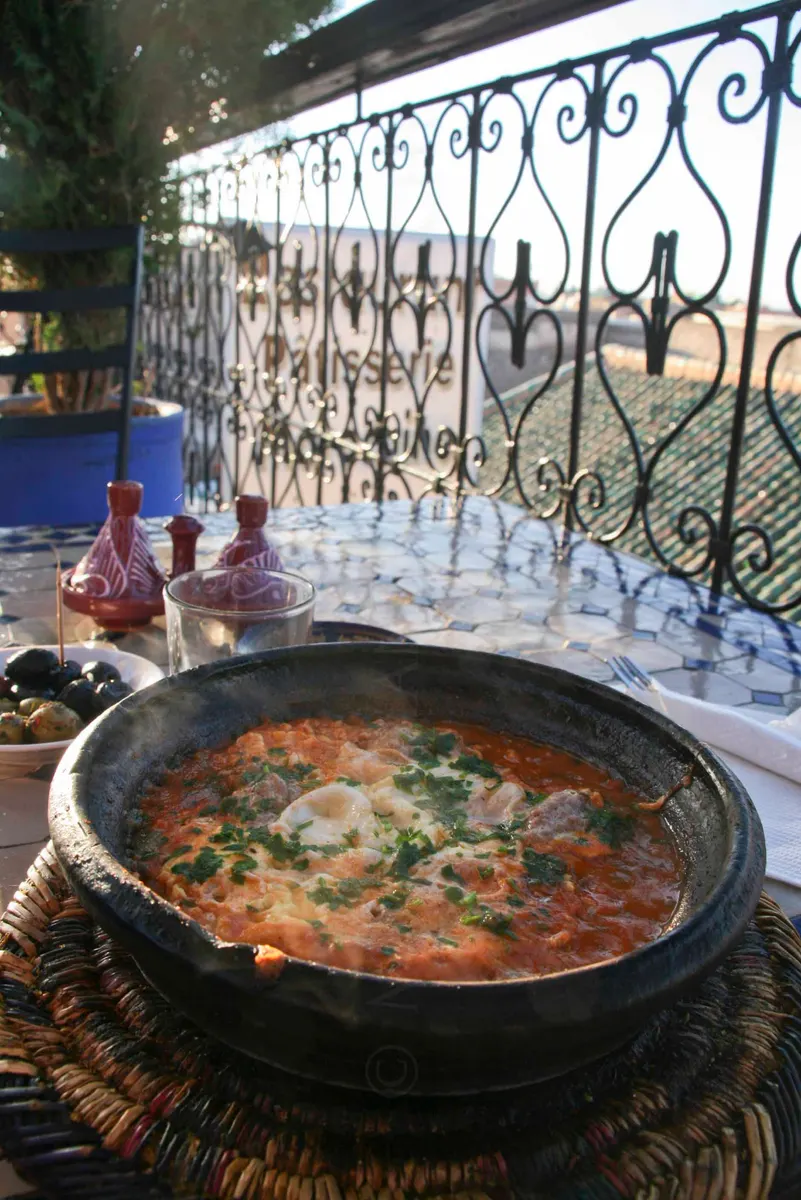
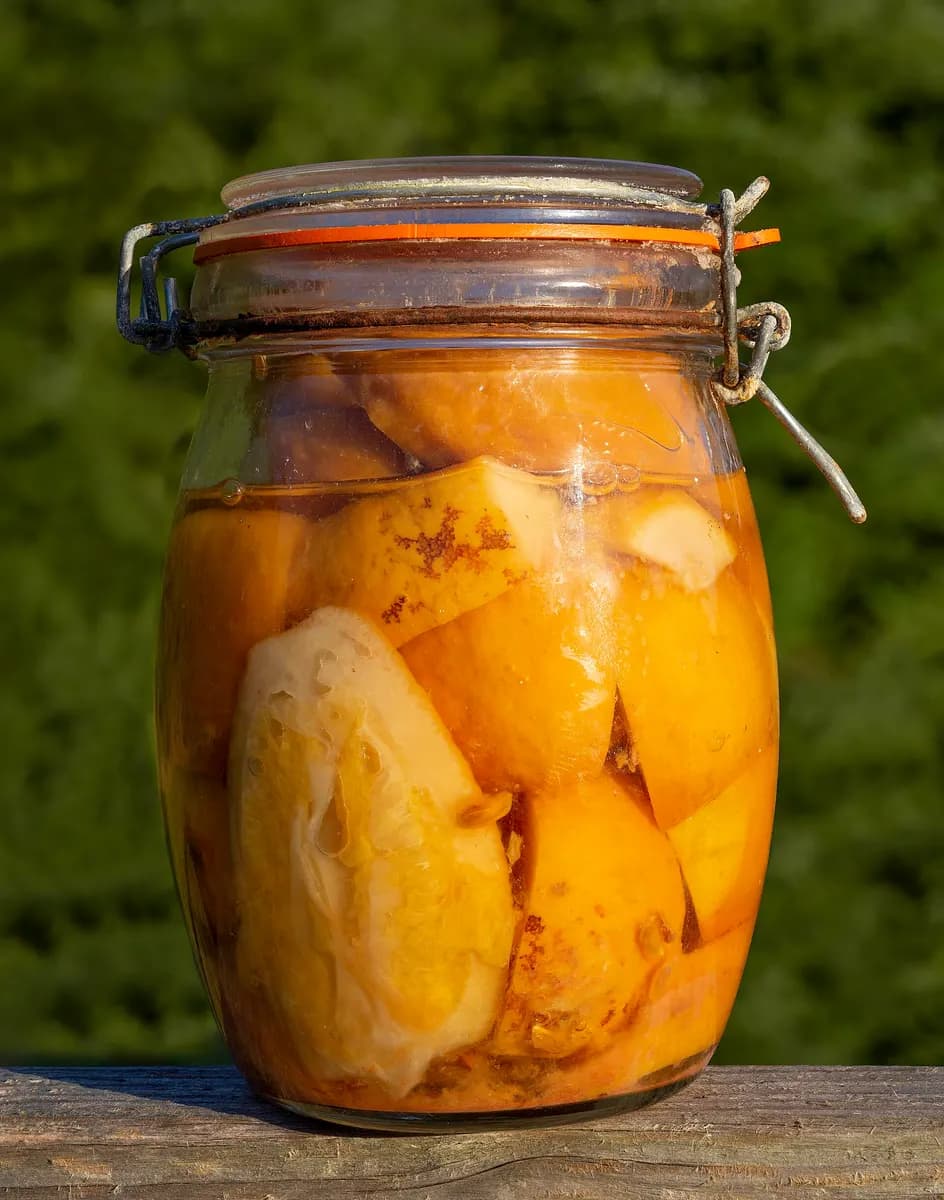
Preserved lemons (l'hamd marakad in Moroccan Arabic) are lemons cut open, packed with salt and left in their own juice for about a month until the rind turns soft, translucent and mellow. They take 20 minutes to make and 30 days to cure. You need only lemons, salt and a jar, and it is one of the easiest preserves there is. Their flavour is the backbone of chicken tagine with preserved lemons and olives, and fresh lemon can't stand in for it.
Paula Wolfert introduced many American cooks to them in her 1973 book Couscous and Other Good Food from Morocco, and the method she described is close to what Moroccan households still do.
At a glance
| Makes | One 1 L (1 qt) jar, about 6 lemons |
| Prep | 20 minutes |
| Curing | About 30 days at room temperature |
| Difficulty | Very easy |
| Keeps | 6–12 months in the fridge once opened |
Ingredients
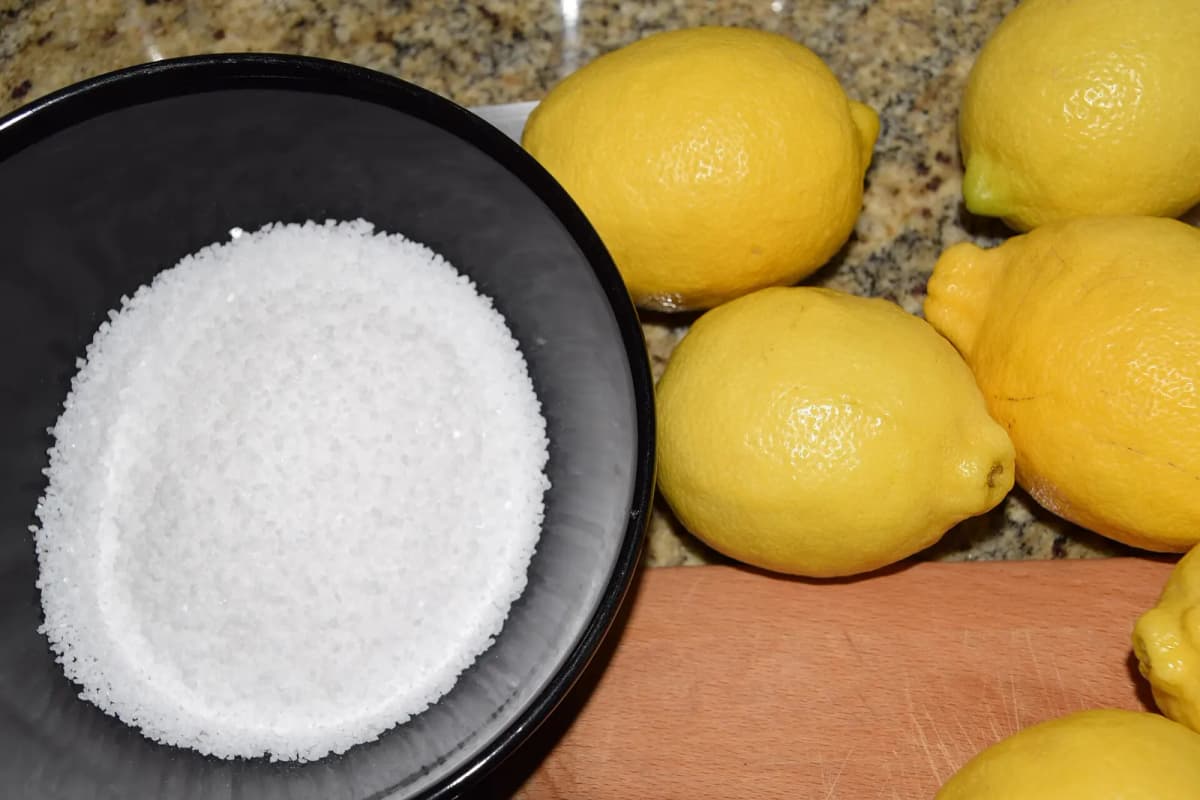
- 6 unwaxed lemons for preserving, plus 3–4 more for juice
- About 6 tbsp coarse non-iodized salt (roughly 1 tbsp per lemon)
- A clean 1 L (1 qt) glass jar with a tight lid
- Optional: bay leaf, cinnamon stick, peppercorns, coriander seeds
About the salt: salt brands differ a lot by volume. 1 tbsp of Diamond Crystal kosher salt weighs about half as much as 1 tbsp of Morton kosher or fine sea salt. If you use Diamond Crystal, use about 1½ tbsp per lemon. Avoid iodized table salt, which can darken the lemons and cloud the brine.
Instructions
- Clean the jar. Wash in hot soapy water and rinse well, or run through a hot dishwasher cycle.
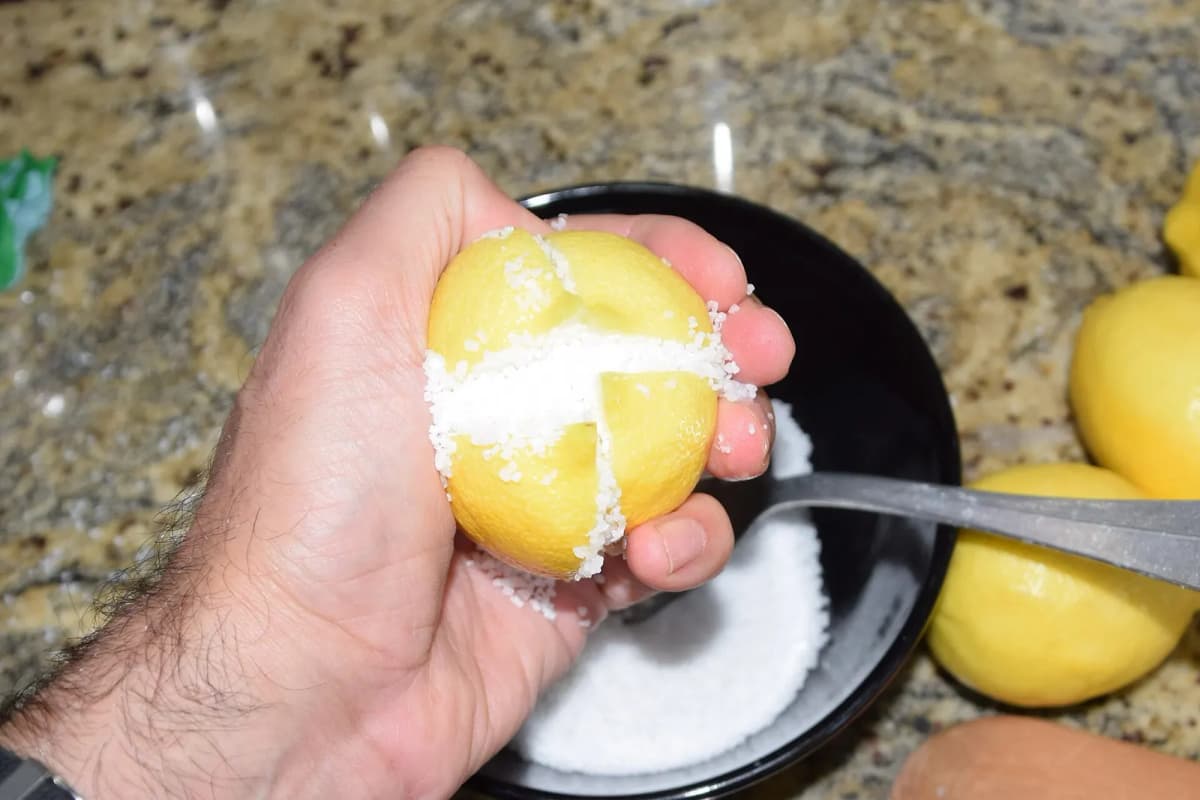
- Prepare the lemons. Scrub them well, especially if not organic, and trim off the hard stem tip. Stand each lemon on its base and cut it into quarters from the top, stopping about 1 cm (½ in) from the bottom so the pieces stay joined.
- Salt them. Open each lemon like a flower and pack about 1 tbsp salt inside, rubbing it over the cut surfaces.
- Pack the jar. Put 1 tbsp salt in the bottom of the jar. Push the lemons in one at a time, pressing hard so they squash and release juice. Tuck in any spices.
- Cover with juice. Add any salt left over, then pour in fresh lemon juice until the lemons are completely covered. Leave about 1 cm of space at the top. Close the lid.
- Wait. Keep the jar at room temperature, away from direct sun. Turn it upside down or shake it every day for the first week to spread the salt, then every few days. If the lemons poke above the brine, push them down or add more juice.
- Check after 3–4 weeks. They are ready when the rind is soft enough to cut with a spoon and looks translucent, not white and pithy. Once opened, keep the jar in the fridge.
How to use them
Always take lemons out with a clean spoon or fork, never fingers, to keep the jar clean.
| Use | How |
|---|---|
| Tagines | Rind in strips, added in the last 15 minutes |
| Salads | Finely diced rind with tomatoes, onions, parsley, olive oil |
| Roast chicken or fish | Chopped rind in the stuffing or under the skin |
| Dressings | ½ tsp chopped pulp whisked into olive oil and herbs |
| Grains and couscous | A little minced rind through warm couscous with herbs |
| Sauces | The brine, a teaspoon at a time, in place of salt |
Rinse the rind before using if you want less salt. Cut down the other salt in the recipe either way.
Which lemons work best
Moroccan cooks prefer small, thin-skinned, fragrant local (beldi) lemons, such as the doqq variety. Outside Morocco:
- Meyer lemons are the closest match: thin skin, floral, ready faster.
- Regular Eureka or Lisbon lemons work fine; choose small, heavy, thin-skinned ones.
- In Japan, domestic lemons (mostly from Hiroshima and Ehime) are commonly sold unwaxed, and their main season is winter, which happens to be the right season to start a jar.
- Avoid lemons with very thick, bumpy skins; they take longer and stay pithy.

Mistakes to avoid
| Mistake | Fix |
|---|---|
| Lemons not covered by juice | Exposed lemons can mold. Keep them submerged, top up with juice |
| Waxed lemons | Wax blocks the salt. Buy unwaxed or scrub in hot water |
| Iodized salt | Use coarse sea salt or kosher salt |
| Using them after one week | The rind is still harsh. Wait the full 3–4 weeks |
| Cutting all the way through | Pieces float up. Keep the base attached |
Quick version (not traditional)
If you need preserved lemon for a recipe this week: slice 2 lemons thinly, toss with 2 tbsp salt and 1 tbsp sugar, and freeze in a bag for 2–3 days, or simmer the slices in salted water for 10 minutes until soft. It gets the rind tender but lacks the rounded, fermented flavour of a 30-day lemon. It is a stand-in, not the same thing.
Buying them
Jars of preserved lemons are sold at Middle Eastern and North African grocers, larger supermarkets and online. Quality varies: good ones have soft, yellow, translucent rinds; poor ones are hard, bitter or packed in vinegar. If you like the flavour, it is worth making your own. Next, make your own ras el hanout, the other basic in a Moroccan pantry.
Recipe card
How to Make Preserved Lemons at Home (Moroccan Method)
- Prep
- 20 min
- Cook
- 0 min
- Serves
- 8
Ingredients
- 6 unwaxed lemons, ideally small and thin-skinned (Meyer or Moroccan beldi if available), plus 3-4 more for juice
- About 6 tbsp coarse non-iodized salt (roughly 1 tbsp per lemon; 90-100 g Morton kosher or sea salt)
- 1 clean 1 L (1 quart) glass jar with a tight lid
- Optional: 1 bay leaf, 1 cinnamon stick, a few peppercorns or coriander seeds
Method
- 1Wash the jar and lid in hot soapy water and rinse well, or run them through a hot dishwasher cycle.
- 2Scrub the lemons and trim the stem ends. Cut each lemon into quarters from the top, stopping about 1 cm (1/2 in) from the base so they hold together.
- 3Open each lemon and pack about 1 tbsp salt inside.
- 4Sprinkle 1 tbsp salt into the jar. Press the lemons in one by one, squashing them so they release juice. Add any spices.
- 5Top with the remaining salt and enough fresh lemon juice to cover the lemons completely. Leave a little headspace and close the lid.
- 6Keep at room temperature, out of direct sun, for about 30 days. Turn or shake the jar daily for the first week, then every few days.
- 7They are ready when the rinds are soft and translucent. Refrigerate once opened.
FAQ
How long do preserved lemons take?
About 30 days at room temperature, until the rinds are soft and translucent. Small, thin-skinned lemons can be ready in 3 weeks.
Do preserved lemons need to be refrigerated?
They are made at room temperature, but once opened, keep the jar in the fridge with the lemons under the brine. They keep well for 6 months to a year.
Which part of the preserved lemon do you eat?
Mainly the rind. Scrape off the pulp, rinse the rind and slice it. The pulp is very salty but can be used sparingly in sauces and dressings.
What is the white film on my preserved lemons?
A thin white film on the brine is usually harmless yeast; skim it off and top up with lemon juice. Fuzzy, coloured mold (green, blue, black or pink) means the batch should be thrown away.