On this page
- Prep
- 20 min
- Cook
- 1 h 30 min
- Serves
- 4
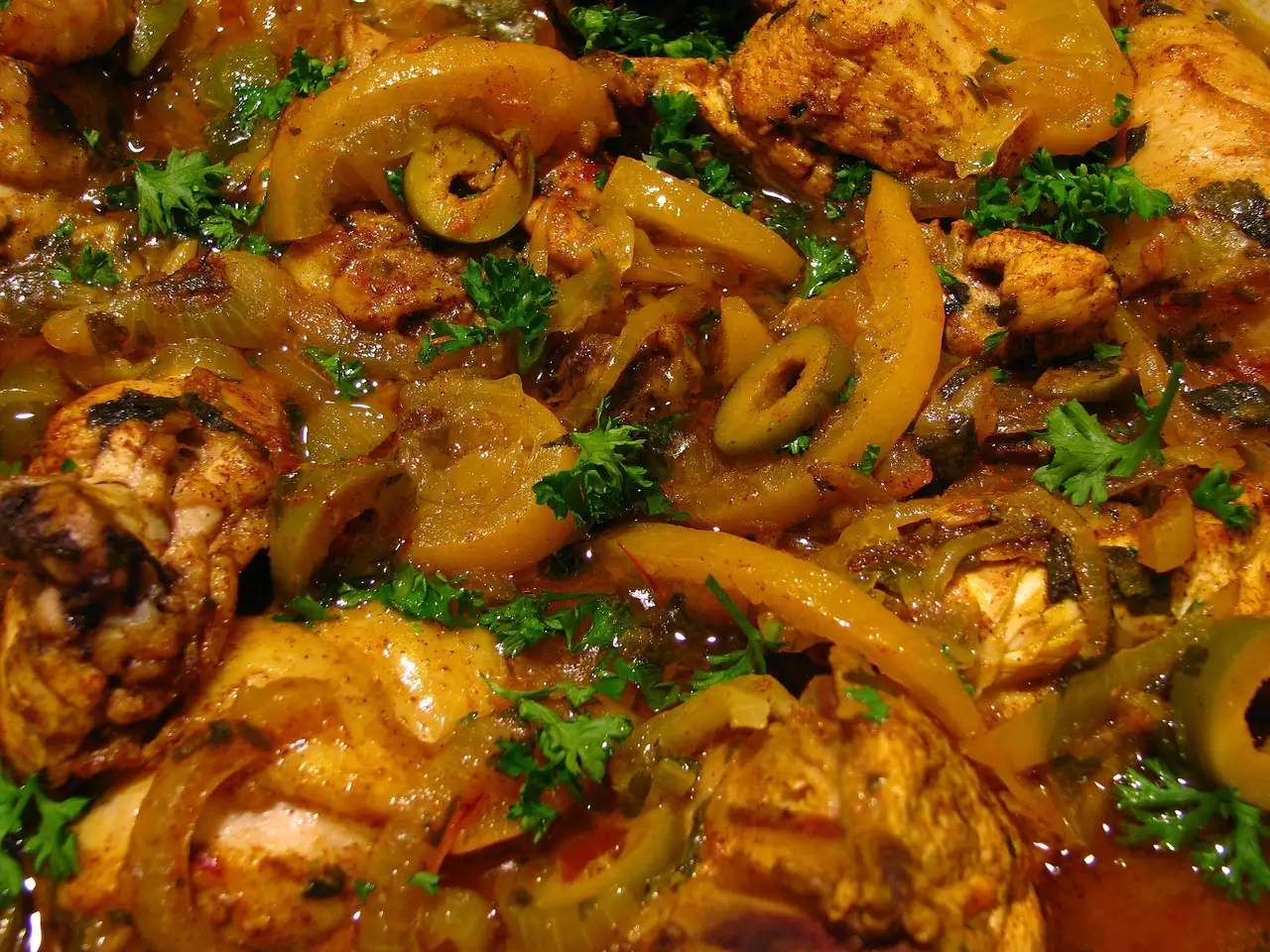
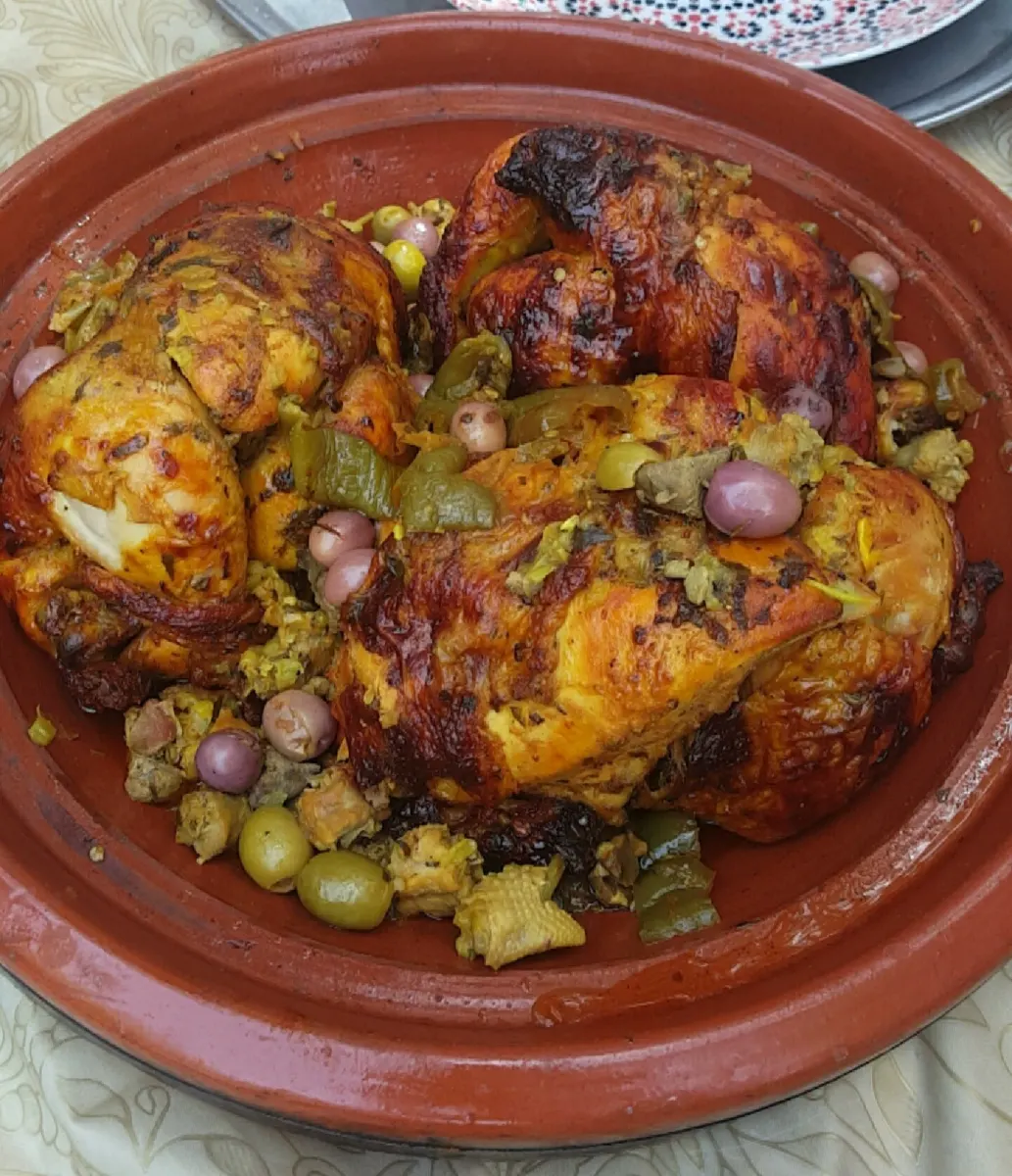
Chicken tagine with preserved lemons and olives (djaj mqualli in many Moroccan homes) is chicken braised slowly in onions, ginger, saffron and turmeric, finished with salty-sour preserved lemon and olives. It takes about 20 minutes of work and 1½ hours of mostly hands-off cooking, and it is an easy dish for a first tagine. You need no special pot; a Dutch oven does the job.
This is the dish most people mean when they say "Moroccan chicken," and it is one of the most searched Moroccan recipes in English. It is also the one most often made wrong abroad, usually because of too much liquid, too much salt, or fresh lemon standing in for preserved.
At a glance
| Serves | 4 |
| Prep | 20 minutes (plus optional marinating) |
| Cook | 1 hour 30 minutes |
| Difficulty | Easy |
| Pot | Clay tagine on a diffuser, Dutch oven, or heavy lidded pot |
Ingredients
- 1 whole chicken, about 1.6 kg (3.5 lb), cut into 8 pieces, or 8 bone-in chicken thighs (about 1.4 kg / 3 lb)
- 2 large onions (about 400 g / 14 oz), grated or very finely chopped
- 3 garlic cloves, minced
- 4 tbsp (60 ml) olive oil
- 1 tsp ground ginger
- 1 tsp ground black pepper
- ½ tsp ground turmeric
- A generous pinch of saffron (about 15 threads), crumbled
- ½ tsp salt, no more at this stage
- A small bunch each of fresh cilantro and parsley, tied with string
- 250 ml (1 cup) water
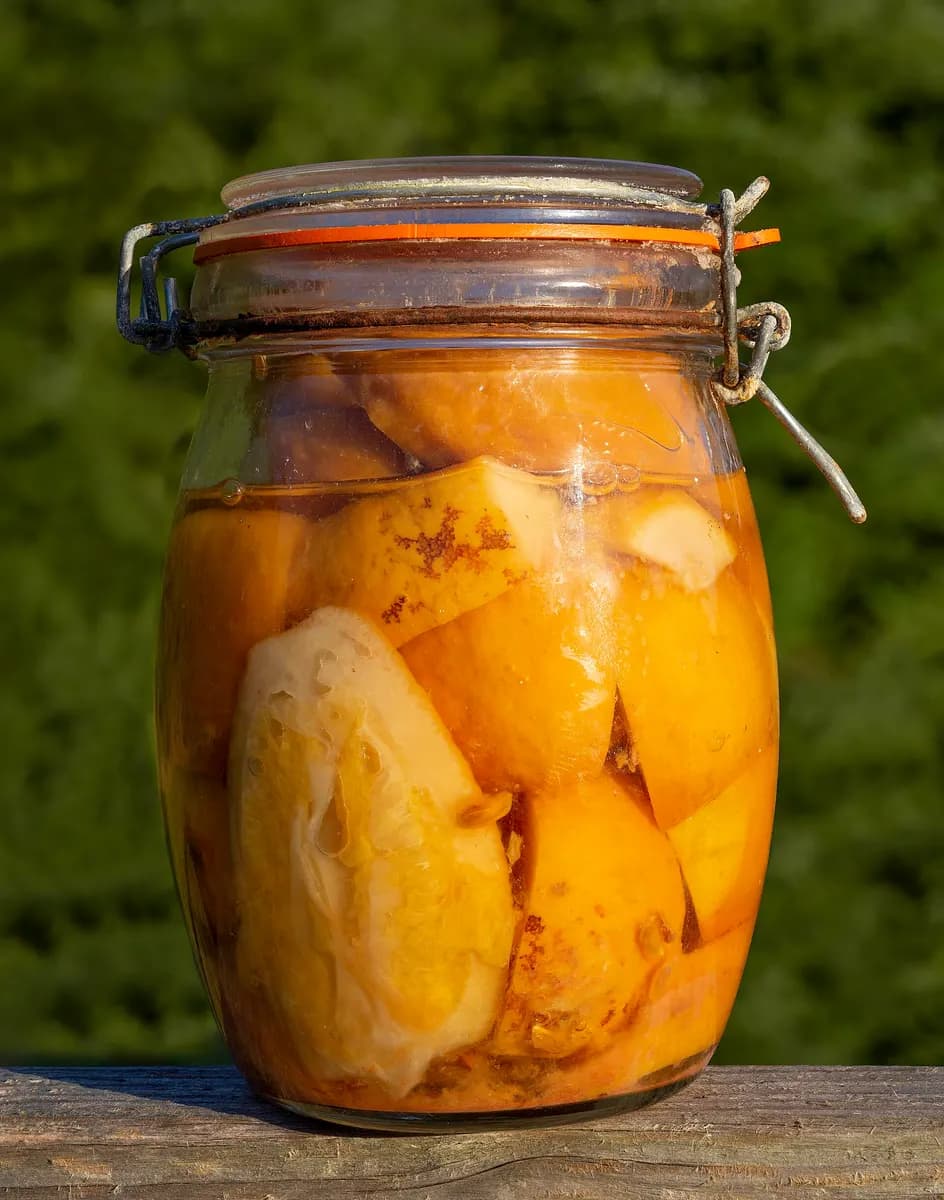
- 1 large or 2 small preserved lemons
- 150 g (1 cup) green or violet olives, rinsed
Instructions
- Marinate. In the tagine base or a Dutch oven, mix the onions, garlic, olive oil, spices and salt. Add the chicken and rub the mixture into it. Leave 30 minutes at room temperature or covered in the fridge overnight.
- Arrange. Turn the pieces skin-side up, the thighs and legs in the middle where the heat is strongest. Lay the herb bundle on top. Pour the water around the edges, not over the chicken.
- Braise. In a clay tagine: set it on a heat diffuser over medium-low heat, cover and cook for 1 hour 15 minutes to 1 hour 30 minutes. Do not lift the lid for the first 45 minutes. In a Dutch oven: bring to a gentle simmer, cover, turn the heat to low and cook 45 to 60 minutes. In the oven: cover and bake at 160 °C (325 °F) for about 1 hour.
- Prepare the lemon. Quarter the preserved lemon, scrape out the pulp (save a little if you like a sharper sauce), rinse the rind and slice it into strips.
- Finish. Remove the herb bundle. Scatter the lemon rind and olives around the chicken. Cook uncovered for 10 to 15 minutes, until the oil separates and the sauce looks thick and glossy rather than watery.
- Season and serve. Taste the sauce now, not earlier. Add salt only if needed. Serve from the pot with Moroccan bread or msemen.
Why the onions are grated
In Morocco the onion is the sauce. Grated or very finely chopped onion breaks down over the long cook into a thick, golden base; there is no flour, cream or stock involved. Large onion chunks stay as chunks and leave you with thin, oily juice. If grating two onions sounds miserable, pulse them in a food processor.
Tagine pot or Dutch oven?
A clay tagine's cone-shaped lid sends condensation back down onto the food, so you need very little water. A Dutch oven loses a bit more moisture and runs hotter at the bottom, which is why the cooking time above is shorter and you should check once halfway. Both give a good result. If you are using clay for the first time, read how to season and use a clay tagine first. Clay pots crack when they go straight onto high heat.
Mistakes to avoid
| Mistake | What happens | Fix |
|---|---|---|
| Salting at the start like a normal stew | Over-salted sauce once lemons and olives go in | Use ½ tsp at the start, adjust at the very end |
| Too much water | Pale, soupy sauce | 250 ml is enough; the chicken and onions release liquid |
| Adding olives at the start | Olives go bitter and salty and turn the sauce harsh | Add them in the last 10–15 minutes |
| Using the lemon pulp whole | Sauce turns sour and salty | Use the rind; add pulp only by the teaspoon |
| Fresh lemon instead of preserved | A different dish: bright and sharp, not mellow | Make preserved lemons ahead, or see the FAQ swap |
| High heat under clay | Cracked tagine, scorched onions | Diffuser, medium-low heat |
| Chicken breast only | Dry, stringy meat | Use thighs and legs, or add breasts for the last 30 minutes |
Finding the ingredients abroad
- Preserved lemons: sold in jars at Middle Eastern and North African grocers, larger supermarkets (look near the olives or in the "world foods" aisle) and online. Homemade ones take about a month; see how to make preserved lemons.
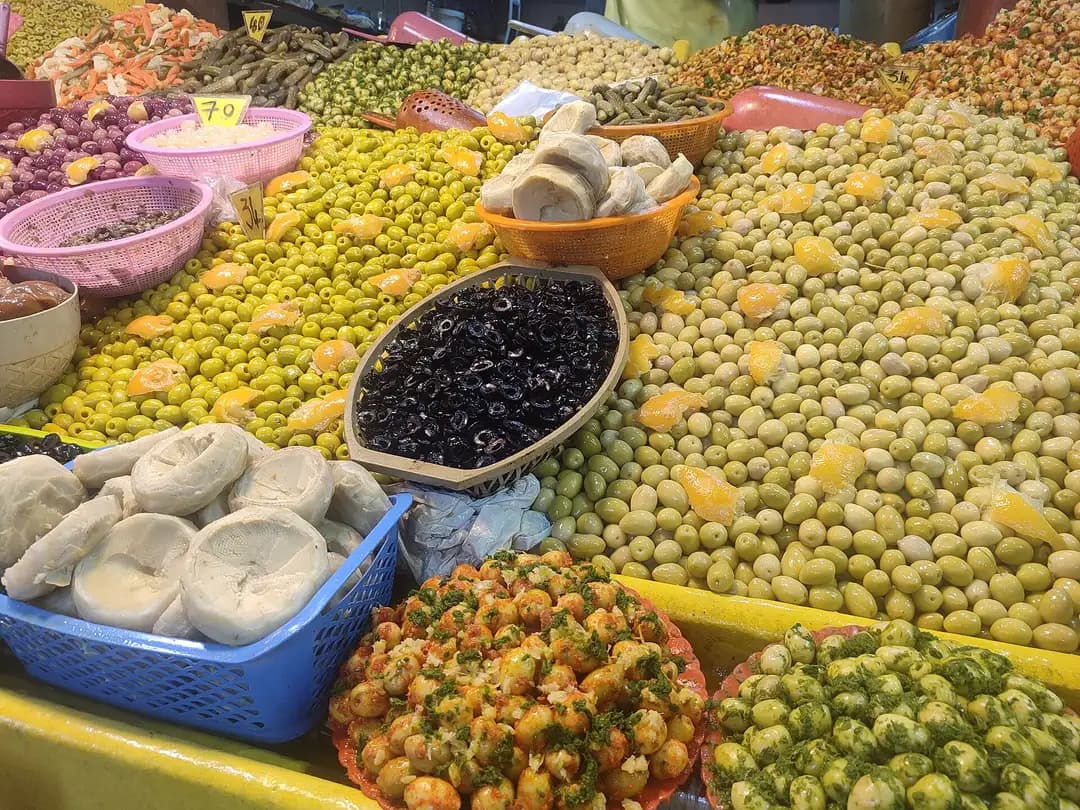
- Olives: Moroccan-style cracked green olives are sold at deli counters. Picholine or Castelvetrano work. Rinse anything sitting in heavy brine.
- Saffron: a small amount goes a long way. Many Moroccan home cooks use only turmeric for colour on weekdays and keep saffron for guests. Leave it out if you must; the dish still works.
- Chicken: Moroccan cooks often use beldi (free-range, older) chicken, which needs longer cooking. Supermarket chicken from the US, UK or Japan is younger and cooks in the times given here.
Make ahead and storage
Like most braises, this tagine tastes better the next day. Cool it, cover it and keep it in the fridge for up to 3 days. Reheat gently in a covered pan with a splash of water. It freezes for up to 3 months, though the olives soften. For a dinner party, cook it fully the day before and do step 5 just before serving.
How it is served in Morocco
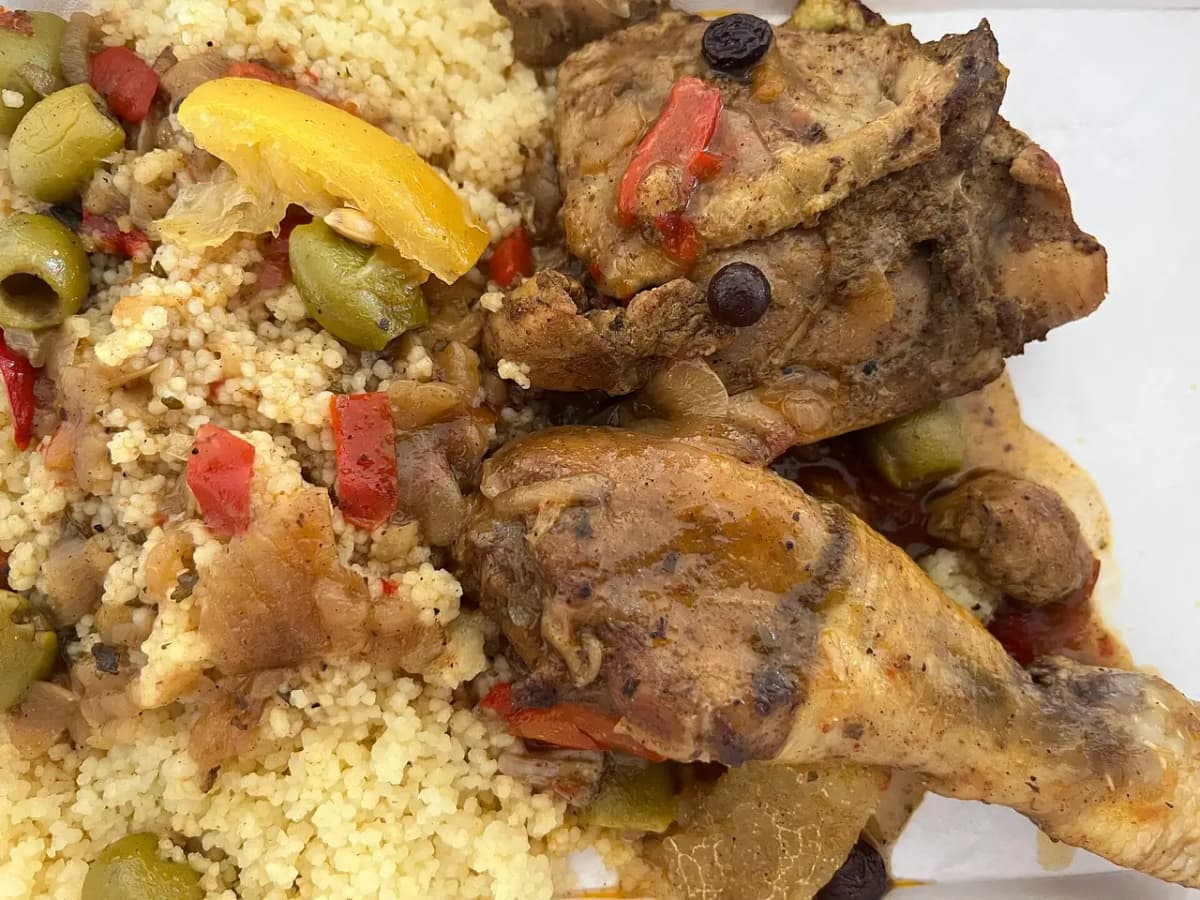
A tagine sits in the middle of the table and everyone eats from their own side, using pieces of bread to pick up meat and sauce. It is not served over couscous; couscous is its own dish (see seven-vegetable couscous). A salad or two before it, and mint tea after, makes a full Moroccan meal.
Recipe card
Moroccan Chicken Tagine with Preserved Lemons and Olives
- Prep
- 20 min
- Cook
- 1 h 30 min
- Serves
- 4
Ingredients
- 1 whole chicken, about 1.6 kg (3.5 lb), cut into 8 pieces, or 8 bone-in chicken thighs (about 1.4 kg / 3 lb)
- 2 large onions (about 400 g / 14 oz), grated or very finely chopped
- 3 garlic cloves, minced
- 4 tbsp (60 ml) olive oil
- 1 tsp ground ginger
- 1 tsp ground black pepper
- 1/2 tsp ground turmeric
- A generous pinch of saffron threads (about 15 threads), crumbled
- 1/2 tsp salt (preserved lemons and olives add more)
- 1 small bunch each fresh cilantro and flat-leaf parsley, tied with string
- 250 ml (1 cup) water
- 1 large or 2 small preserved lemons
- 150 g (1 cup) green or violet olives, rinsed
Method
- 1Mix the onions, garlic, olive oil, ginger, pepper, turmeric, saffron and salt in the tagine base or a Dutch oven. Add the chicken and turn to coat. Leave 30 minutes, or up to overnight in the fridge.
- 2Arrange the chicken skin-side up, lay the herb bundle on top and add the water around the edges.
- 3Tagine: set on a heat diffuser over medium-low heat, cover, and cook 1 hour 15 minutes to 1 hour 30 minutes. Dutch oven: bring to a simmer, cover and cook on low for 45 to 60 minutes.
- 4Quarter the preserved lemon, scrape out and discard the pulp, rinse the rind and cut into strips.
- 5Remove the herb bundle. Add the lemon rind and olives around the chicken. Cook uncovered 10 to 15 minutes until the sauce is thick and the onions have melted.
- 6Taste the sauce for salt, then serve straight from the pot with bread.
FAQ
Can I make chicken tagine without a tagine pot?
Yes. A heavy Dutch oven or any lidded, thick-bottomed pot works. Keep the heat low and the lid on, and reduce the sauce uncovered at the end.
What can I use instead of preserved lemons?
There is no perfect swap. The closest is the finely grated zest of one fresh lemon plus a squeeze of juice and a pinch of extra salt, added at the end. The flavour will be brighter and less funky.
Should I brown the chicken first?
Traditionally, no. Moroccan cooks usually start the chicken in the spiced oil with onions and let it braise. Browning is fine if you like it, but it is not needed.
Which olives should I use?
Green or violet (purple-red) cracked olives, the kind sold in Moroccan markets for tagines. Avoid black canned olives and very salty brine-cured ones without rinsing.
Sources
- Williams Sonoma: Chicken Tagine with Preserved Lemons and Olives (reference recipe)
- Simply Morocco: How to make Moroccan chicken tagine with preserved lemon and olives (reference recipe)
- Pilot Guides: Chicken tagine with olives and preserved lemon (reference recipe)
- Hachette Book Group: Paula Wolfert on preserved lemons